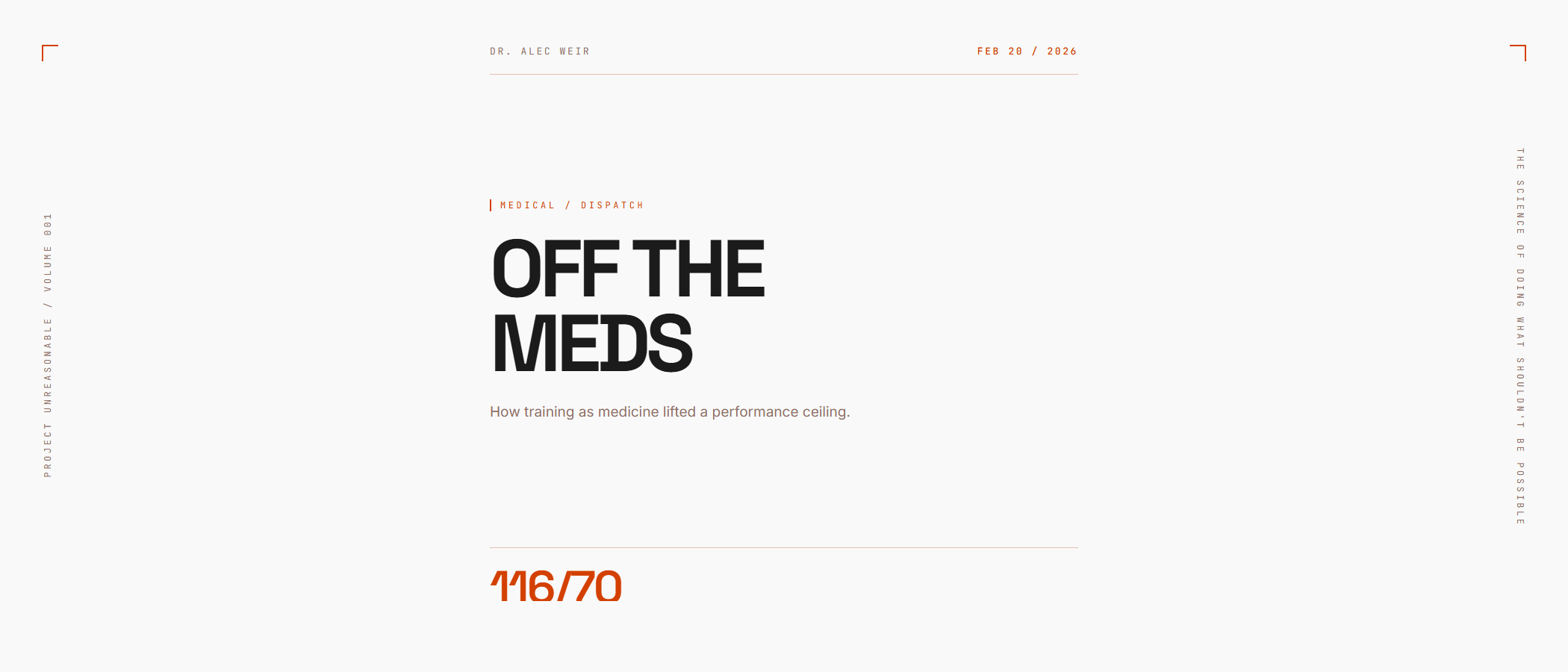
How We Got John Off His Blood Pressure Medication
One of the quieter wins of Project Unreasonable happened well before we ever talked about Boston qualifying times. John came to me on a blood pressure medication. Six months later, he's off it completely — and I want to talk about why that matters more than most people realize.
The athletic ceiling nobody discusses
Blood pressure medications do their job well. They lower pressure, reduce strain on the cardiovascular system, and prevent the long-term organ damage that hypertension quietly causes. But most of these medications — particularly beta blockers and certain ACE inhibitors — also limit how high the heart rate can climb during hard efforts. For a recreational walker, that's a non-issue. For someone who needs to execute VO2 intervals at 90% of max heart rate, it's a hard ceiling on performance. You physically cannot get there.
This is rarely discussed with patients because most patients aren't training for a marathon. But if you're serious about endurance performance and you're on a BP med, the medication itself is a variable worth solving.
What actually moved the needle
We didn't do anything exotic. Consistent aerobic training. Dialed-in sleep (more on that in a separate post). Dropping weight. Casey optimizing the nutrition side. And close monitoring of pressure readings so we could titrate down responsibly under medical supervision, not based on vibes.
Training is medicine when it's prescribed like medicine. That's not a cute slogan — it's dose-response physiology. John's resting blood pressure is now sitting in the 116/70s range without any pharmaceutical assistance. That's a real change in cardiovascular risk profile.
Why this matters beyond one marathon
If John never ran another race after Boston, this would still be the most important result of the project. Coming off a BP medication lowers cardiovascular risk, preserves kidney function, and improves long-term quality of life in ways that compound over decades — not months. The marathon is the forcing function; the healthspan gain is the actual prize.
We'll keep monitoring. Training loads increase from here and stress on the cardiovascular system will climb with them. But the starting baseline is now a healthier, unmedicated one — and that's a much better place to launch from.
— Dr. Alec Weir
Discussion