
team LIVE
Overtraining Kills More BQ Attempts Than Undertraining
As John gets fitter, the instinct is to do more. That instinct, more than anything else, is the thing I'm hired to protect him from.
The science of doing what shouldn't be possible. Documenting the frontier of human performance and radical physiological adaptation.
VOLUME 001 / ISSUE 04 As John gets fitter, the instinct is to do more. That instinct, more than anything else, is the thing I'm hired to protect him from.

The full team checked in for our monthly update. Training is on plan for a BQ, the nutrition strategy is evolving, we're optimizing hormone protocols, and the injury prevention work is paying off. Plus: what running in Iceland taught me about resilience.

Two tendon issues have shown up in John's first training block. Both responded quickly to the same basic approach. Here's what we did and why it works.

Last month I pulled John's protein target down from his lifetime habit. It wasn't a mistake — it was a correction. Here's why sometimes "more protein" isn't the answer.

Every pound carried over 26.2 miles has a cost. John's starting weight included excess lean mass relative to what's optimal for endurance performance — so we're cutting it on purpose.

John has spent most of his adult life under a barbell. Asking him to trade that identity for a marathon training plan was never going to be a purely physiological conversation.
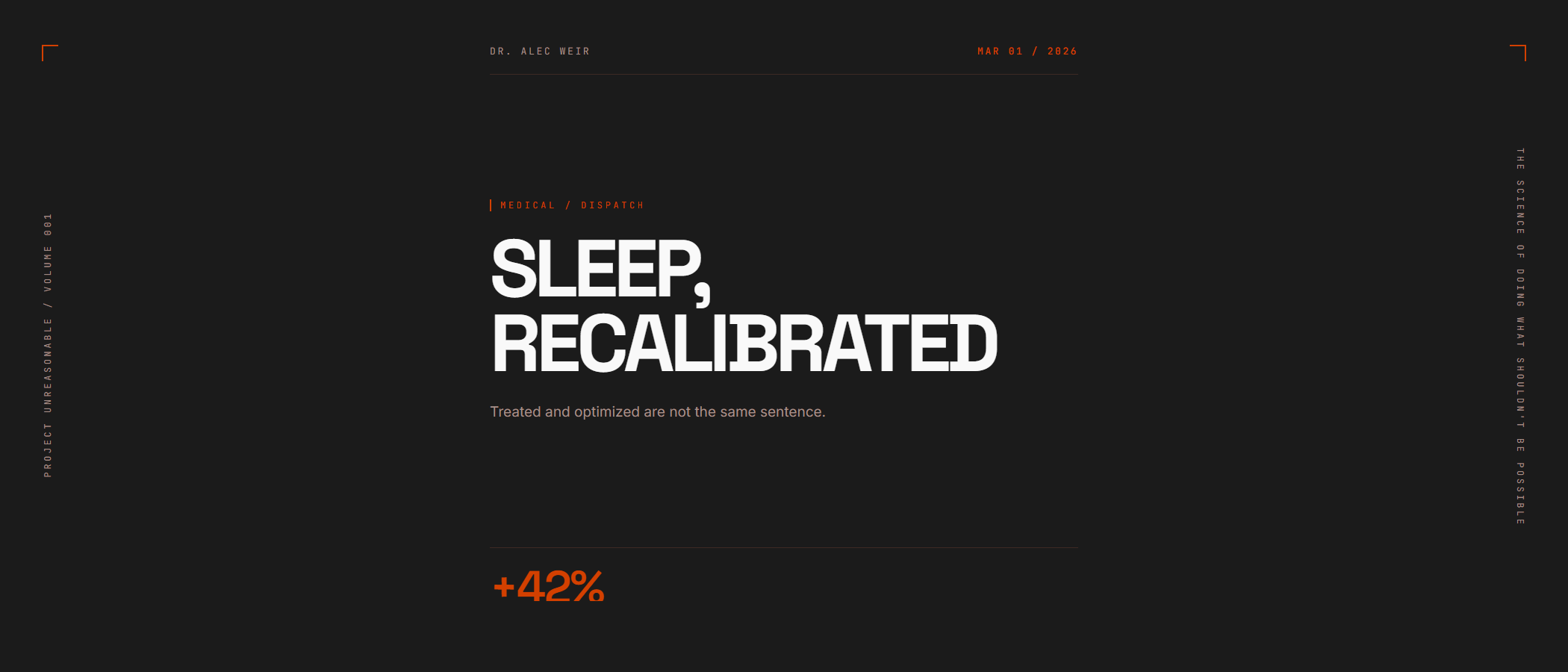
John's sleep apnea was already being treated when we started. The problem wasn't the diagnosis — it was that his CPAP settings weren't optimized for an athlete's recovery needs.

Coming off a blood pressure medication is a life win that compounds over decades — reduced cardiovascular risk, better kidney function, and for an athlete, a real performance ceiling removed.